
The Crate Is Your Dog’s SOP
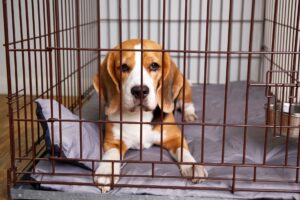
The other day, I had an unexpected lightbulb moment. My husband Mark was reading me part of an interview he gave about Standard Operating Procedures (SOPs) in business, and suddenly it hit me:
The crate is the SOP of life with a dog.
In business, SOPs are simply the agreed-upon “best way” of doing things so that everything runs smoothly, consistently, and without constant supervision. They aren’t about control or micromanagement — they’re about clarity, structure, and reducing chaos.
That is exactly what a properly used crate provides for a dog.
At Lifestyle Dog Training, we use the crate as a foundational training tool, not just a piece of furniture. The crate teaches a dog how to rest, regulate themselves, and pause from making constant decisions. It creates predictability in their day, just like SOPs create predictability in a business.
I strongly believe in a daily routine that includes structured crate naps — typically about three hours in the morning and three hours in the afternoon. This gives the dog the deep, uninterrupted rest their mind and body truly need. Most dogs do not naturally choose rest; it has to be taught.
What I see far too often are owners who feel pressure to constantly entertain or exhaust their dog with more walks, more games, and more mental stimulation. The result is usually the same: an exhausted owner and an over-stimulated dog. And when dogs are chronically tired but never truly rested, they often begin acting out through behaviors like biting, chewing, pacing, and inability to settle.
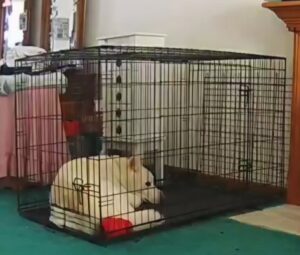
In business, when systems only live in someone’s head, everything falls apart the moment that person is unavailable. In the same way, when a dog has no consistent structure, they are left to manage their world on their own — and most dogs are not emotionally equipped to do that well.
The crate is not about confinement.
It is about giving the dog a clear process for how life works:
When it’s time to be active, we’re active.
When it’s time to rest, we rest.
That consistency is what creates balance.
When owners slow things down and enforce a regular nap schedule, something powerful happens: both the dog and the owner become more regulated. Families are often surprised to discover their dog does not need constant exercise or endless stimulation every day — they need structure, predictability, and permission to turn off.
Just like SOPs allow a business to run without constant oversight, the crate allows a household to function without constant chaos. It prevents bad habits from forming, reduces emotional overload, and teaches the dog how to wait and settle.
The crate is your dog’s SOP for life.
Remove it, and you remove the system that supports calm behavior.
Need help building structure for your dog?
This is exactly what we focus on in Lifestyle Dog Training. If your dog struggles with settling, chewing, biting, or staying calm in the home, training can help you create a balanced routine that works for both you and your dog. 👉 Contact Julie to schedule a consultation and learn how she can help you build a calmer, more structured life with your dog.